Hello to all my fellow SEO pros. I am SEO Xiaoping (SEO小平), an SEO specialist with 9 years of experience in “dead-hard” Google SEO, focusing on English and various niche language site operations. Welcome to follow my Official Account and add me on WeChat by directly copying: Xiao_Ping_Up
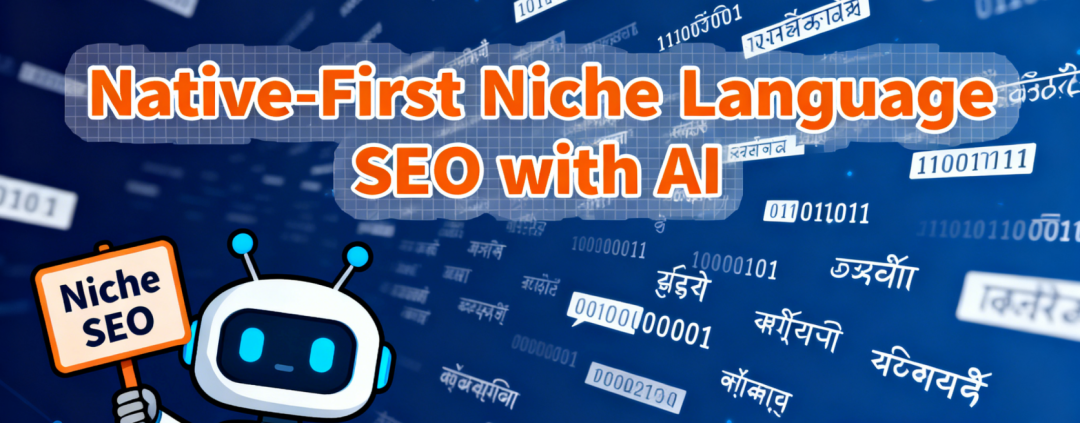
Recently, I have participated in many sharing sessions and exchanges, where I frequently mentioned the concept of “Native-First SEO”.
Of course, this is a term I coined myself, so many people don’t understand or aren’t clear about it. Today, I’m using this long article to clearly explain its benefits and advantages. In the future, if anyone asks me what “Native-First Niche Language SEO ” is, I’ll just forward this article. Hahaha…
1. Is “Translation-Style SEO” Becoming Increasingly Low-End? ”
Native-First Niche Language SEO ” is King
As an SEO practitioner, have you installed translation plugins like GTranslate or TranslatePress? Have you encountered this dilemma: spending a lot of money to translate high-quality English content into niche languages, yet keyword rankings remain stuck past the second page; or users click through but bounce immediately, with inquiry volumes falling far below expectations? It’s even possible your niche language content hasn’t been indexed by Google at all.
This isn’t because your content isn’t good enough; it’s because the “translation-led” overseas SEO model, which has lasted for twenty years, can no longer keep up with the dual evolution of search engines and users.
In the past, “English Creation → Translation Localization” was the default path for companies going global—first polishing a high-quality piece of content for the English market, then translating it into Arabic, Spanish, German, etc., via machines or humans. But today, this “translation-ese” content is facing a crisis of trust: search engines can precisely identify its rigid logic, and local users can spot the “non-native” traces at a glance, immediately losing trust in your website.
2. The SEO Xiaoping Team’s Successful Practice of “Native-First Niche Language SEO (Native + AI SEO)”
Why call it “Native-First SEO Niche Language” SEO? Isn’t the name strange? It’s because I believe that the content of a French website should have real French (language and thinking should both be within the French system). The logic should be French down to the blood. The same logic applies to German, Japanese, Vietnamese, and Russian, so I call it “Native-First SEO Niche Language SEO ”.
This is the core reason why I proposed “Native-First SEO”. This brand-new methodology completely abandons the “Source Language → Target Language” translation chain. Instead, it uses the “native creation capability” of Large Language Models (LLM), combined with the frontline practical experience of foreign trade sales reps, to create site content that aligns with local users in terms of language, culture, and logic.
For SEO operations, this isn’t abstract theory, but a practical solution that directly boosts rankings and inquiries. This goes beyond theory; I graduated with a major in Business Japanese, and the first site I built was a pure Japanese e-commerce site. Even before ChatGPT was born, we were using CopyAI to write Native-First content in Japanese, Russian, Polish, and Spanish. After the birth of ChatGPT, we found its accuracy in niche languages to be excellent, highly efficient, and with unlimited production capacity. Therefore, we expanded our AI + Niche Language Website SEO business—what I call Native-First Niche Language SEO. This is a proven, feasible method. I have used this method to guide 100+ companies and individuals, and they have all achieved great results.
3. The Unavoidable Core Conflict: Search Algorithms Understand “Local” Better Than Plugins
The fundamental problem with traditional machine-translated niche language SEO lies in a structural mismatch: “Google’s Algorithm Capabilities > Content Quality.” You might still be relying on the old perception that “accurate translation is enough,” but Google’s algorithms have long since achieved dual deep recognition of “Semantics + Culture”—from BERT and MUM algorithms understanding context, to the “Helpful Content System” determining “real value,” to SpamBrain filtering “non-native content.” Search engines are no longer satisfied with “grammatically correct”; they pursue “understanding local users.”
Take a scenario familiar to SEO operators: When a corporate buyer in Saudi Arabia searches for ”???? ???? ??????? ???????” (Best Industrial Cooling Solutions), they aren’t looking for content that is just “literally accurate.” They want a solution that fits the decision-making logic of Middle Eastern companies—for example, mentioning “heat dissipation designs adapted to desert heat, working stably in 70°C environments” or “payment terms compliant with Islamic finance.”
If your content is translated from English, merely listing technical specs without touching on local needs, you will be penalized for “logical dissonance” and see skyrocketing bounce rates, no matter how precise your keyword layout is.
The essence of this mismatch is: Translation only conveys “information,” but cannot convey “trust.” And today’s search engines use “user trust” (judged by dwell time, interaction rate, inquiry conversion, etc.) as a core ranking metric.
- Practical Standards: The 4 Core Dimensions of Native-First SEO Content
I am not here to give you a vague concept of “Native-First SEO” but rather 4 quantifiable, executable standards. Only by meeting these 4 points simultaneously can content pass the search engine’s “local verification” and move target users.
- Language Accuracy: The “No Translation Tone” Requirement (91%+ Accuracy)
“Accuracy” here doesn’t mean correct grammar, but rather “no traces of an intermediary language.” The core operational point is: Let AI “think and write” directly in the target niche language, rather than writing in English first and then translating. For example, when doing German SEO, give the AI the prompt: “Write a technical article on ‘industrial valve maintenance’ in the tone of a German mechanical engineer,” rather than “Translate this English valve maintenance article into German.”
Why do this? Because translation is bound by the syntax of the source language—for instance, English habits favor “conclusion first, reason later,” while German often favors “setup first, point later.” Forced translation results in “German sentences with English logic,” which reads incredibly awkwardly for locals. AI native creation can directly call upon the target language’s corpus, naturally avoiding “translation tone,” which is the foundation for increasing user dwell time.
- Cultural Fit: Detailed Operations that Hit Local “Hidden Rules”
SEO operators often ignore one point: local users’ sensitivity to “cultural dissonance” far exceeds their tolerance for “grammatical errors.” The cultural fit of Native-First SEO content isn’t about adding a few local proverbs, but integrating the “hidden cultural codes” of the target market. These details are often what foreign trade sales reps know best:
Taboo Rules: For example, when promoting equipment to certain Buddhist countries in Southeast Asia, avoid using “black” to describe product appearance, and don’t emphasize “profit first”; instead, emphasize “environmentally friendly and beneficial to the people.”
Life Scenarios: When pushing industrial heaters to the Nordic market, highlight “low energy consumption suitable for high Nordic electricity prices,” rather than simply saying “heats up fast.”
Social Concepts: When writing B2B content for the Latin American market, mention “long-term cooperative relationships” more than “efficient transaction processes,” because locals value interpersonal trust more.
These details cannot be obtained through translation, but they make users instantly feel “this content understands me,” directly increasing the willingness to inquire.
- Logical Optimization: “Argumentation Structures” Adapted to Local Thinking
Besides powerful language capabilities, LLMs (Large Language Models) have powerful reasoning capabilities. This is something every AI company emphasizes when releasing products, yet it is ignored by most sellers.
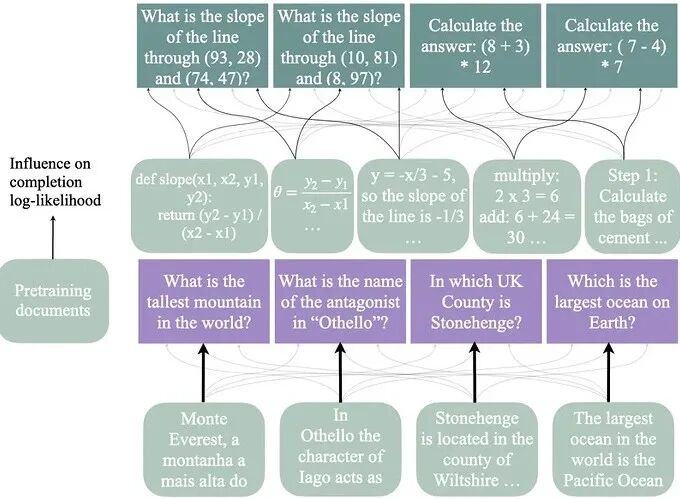
(Visualizing a diagram of AI LLM reasoning combined with semantics)
The simplest example is taking written English content and mechanically translating it into niche languages using AI. This is treating the AI reasoning ability—which companies burned billions to train—like trash. It’s like using an anti-aircraft gun to hit a mosquito—a massive waste of talent. The correct approach is definitely to use niche language keywords and key knowledge points to let the AI reason and write the content itself.
Translation plugins used on sites inherently lack local national reasoning. If you deliberately force an AI LLM, which already possesses reasoning capabilities, to just translate without reasoning, it is a pity.
The same product selling point requires different “persuasion logic” for users in different regions. The fatal flaw of translated content is forcing the “linear logic” of the English market (Selling Point 1 → Selling Point 2 → Conclusion) onto all regions. The core of Native-First SEO content is that “logical reasoning is also localized.”
Here are 2 examples:
Legal Risk in Middle Eastern Islamic Countries: An English website selling pre-prepared Dongpo Pork (pork belly)—directly translating pork food products into Arabic and placing them on a site for Islamic countries violates the Quran and is illegal.
eBike Standards in the US vs. Vietnam: For products like eBikes, the standard in the US is the federal mandatory standard CPSC Certification (16 CFR 1512) and UL safety standards for batteries. However, if your site uses machine translation plugins like GTranslate or TranslatePress, it will display these standards on the Vietnamese page. In reality, Vietnam has its own clear mandatory certification, the CR Certification, requiring the technical standard QCVN 91:2019/BGTVT. This leaves Vietnamese users confused when looking at your translated page—it’s completely irrelevant. Who would dare place an order with you?
Local Native-First Niche Language writing is not direct translation; it is letting the AI LLM perform reasoning to write localized copy that fits perfectly with local laws, regulations, and customs. At the same time, search engines judge user experience through “argumentation fluency”—logically adapted content significantly boosts interaction rates, making rankings naturally more stable.
- Strong Professionalism: The “E-E-A-T” Breakthrough Point via Injected Experience
In Google’s E-E-A-T (Experience, Expertise, Authoritativeness, Trustworthiness) standards, “Experience” is the easiest point for small and medium-sized foreign trade enterprises to break through, and it is the part most lacking in translated content. The professionalism of Native-First content centers on “AI Framework + Injection of Industry Knowledge and Experience.”
For example, if you export building materials to the Middle East, a sales rep definitely knows that “Middle Eastern clients are particularly concerned about sandstorm resistance” and “Saudi government procurement requires SASO certification.” These practical experiences can be instilled into the AI through “multi-round human-machine dialogue”—first let the AI generate a draft in Arabic, then have the sales rep provide revision input: “Add our case study of supplying a mall in Riyadh last year here, emphasizing the sandstorm resistance test data,” or “Add the SASO certification process, clients ask this often.”
This “AI builds the skeleton + Experience fills the flesh” content aligns with local language habits while possessing unique practical value, perfectly hitting Google’s criteria for “Helpful Content.”
5. Will using entirely AI-generated niche language content be penalized by Google algorithms?
For any SEO operator, the biggest psychological barrier to adopting new technology is: Will Google penalize AI content?
The answer is: No, it will not be penalized.
However, there are subtle prerequisites. Understanding this is the premise for executing the “Native-First Niche Language” AI writing strategy: The core logic of the “Helpful Content” system.
Google officially states: “Google does not ban AI-generated content. On the contrary, we focus on whether content is helpful, original, and people-first.” The “Scaled Content Abuse” policy of March 2024 indicates that Google does not ban automation itself, but rather valueless automation.
I often hear many reasons for opposing AI writing, which are actually misinterpretations of the above Google rules. The successful niche language cases of my own company have already shattered these lies.
6. Why Must You Enter the Game Now? The “Technical Dividend Window” Brought by LLMs
Many SEO operators ask: “I wanted to do native niche language content before, but hiring local writers was too expensive. Why is it feasible now?”
The answer is the “Technical Singularity” of Large Language Models—LLMs’ “Native Generation Capability” has far surpassed their “Translation Capability,” and the cost is extremely low.
Research data shows that content quality from LLMs in “Native Creation” mode is 40% higher than in “Translation Mode.” When you ask AI to “translate English content into Spanish,” it is constrained by English sentence structures (e.g., forcing “subject-first” word order, whereas Spanish often places the object first). But when you ask AI to “write a procurement guide from the perspective of a Spanish building materials buyer,” it directly calls upon the native Spanish corpus, writing with locally common sentence structures and terminology, and can even integrate real-time information like “new Spanish tariffs on building materials.”
For companies running websites, this means a “low barrier + high return” bonus period: you no longer need to rely on expensive local writers. By simply mastering “AI Prompt Engineering + Integration of Foreign Trade & Cross-Border E-commerce Experience,” you can quickly produce high-quality native content. Currently, most competitors are still stuck in the old model of “plugin translation optimization.” This is your best time to seize the blue ocean of niche language traffic—while others are worrying about the ranking of translated content, your “Native-First SEO” content will already be firmly on the first page, capturing precise inquiries thanks to its “local attributes.”
7. Traffic Upgrade: From “Machine Translation Mindset” to “Native Native Mindset”
The core of niche language SEO in the AI era is not “using technology to replace machine translation,” but “using AI LLM technology to reconstruct content logic.” For the average website operator, the “Native-First SEO” methodology is not an unreachable theory, but a landable operational process: use AI as the base for native creation, use foreign trade experience to supplement professional details, and ensure content aligns with target users in language, culture, and logic.
From 2025 to 2026, the competition in the global Native-First niche language search market has not yet reached a fever pitch, and search engines like Google are vigorously supporting “helpful local content.” Entering now allows you to avoid the red ocean slaughter of English SEO while leveraging technical dividends to establish a first-mover advantage—your “Native-First SEO” content will eventually become a core weapon for seizing global traffic in the AI era.
Of course, in practice, I have also found some drawbacks and flaws in this “AI + Industry Experience” output method. However, the flaws do not obscure the brilliance. The skills and reasoning of LLMs are constantly evolving—just look at how fast AI like ChatGPT, Gemini, and Grok have iterated in recent years.
In short, sitting and daydreaming creates problems; taking action creates answers. All the issues you are worried about, your competitors are also worried and hesitating about. It all depends on who makes the first move to break into the blank market.
Currently, over 100+ Chinese manufacturers and trading companies have learned best practices for native SEO.